
Maggio has arrived in Italy as more than a date on the calendar. Across Florence, Assisi, Rome and smaller provincial towns, the month is bringing music, pageants, street markets and political gatherings back into public view. The appeal of Maggio lies in its visibility: performances happen in squares, historic courtyards and open-air stages, where residents can hear rehearsals from their balconies and visitors often stumble into events without planning to attend. In Florence, the Maggio Musicale Fiorentino remains the month’s most prestigious cultural marker, linking opera, orchestral music and contemporary work under a festival name that has carried international weight since 1933. Yet the broader Maggio mood is less formal than a concert program. It is the sound of chairs being dragged across stone pavements。vendors setting up flower stalls before sunrise and musicians testing microphones while cafés fill around them.The Maggio calendar also reflects the sharp regional character of Italian culture. In Assisi, Calendimaggio turns the arrival of spring into a competitive historical pageant, with rival districts staging medieval processions。songs and elaborate costumes. The event is theatrical, but its energy comes from local participation rather than tourism alone. Families contribute fabrics, neighborhood groups rehearse for months and children learn the chants that older residents remember from their own youth. Maggio in this setting is not a decorative theme applied by an event agency;
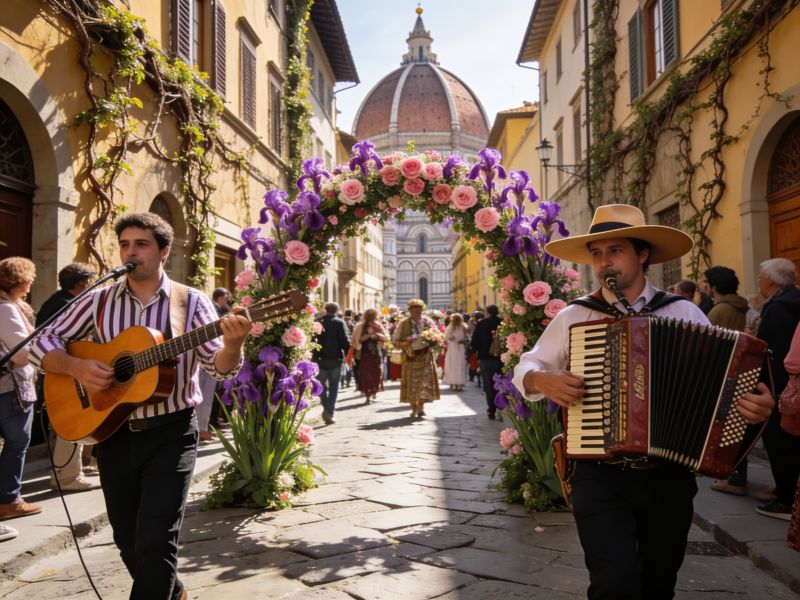
it is a living argument about identity, memory and who gets to represent a city. Visitors may see polished banners and carefully choreographed parades, but behind them are long evenings in community halls, where disagreements over costumes or procession routes can be taken remarkably seriously.Music gives Maggio its strongest national profile. The Maggio Musicale Fiorentino attracts conductors, singers and ensembles whose work places Florence within Europe’s competitive festival circuit. Its programming often moves between canonical opera and newer compositions, a balance that can divide audiences but keeps the institution from becoming a museum of familiar names. Outside the theaters。smaller Maggio concerts create a different kind of access. Municipal bands perform in parks, young artists use courtyards as temporary stages and independent venues arrange late-night sets for audiences who may never buy a ticket to the main festival. That spread matters economically as well as culturally. Hotels, restaurants, transport operators and bookshops all benefit when a performance turns a quiet weekday into a busy evening. A rainy forecast can change the atmosphere quickly, but it rarely removes the month’s appetite for gathering.Another face of Maggio appears in Rome on May 1, when the Primo Maggio concert brings large crowds to Piazza San Giovanni. Organized around labor, live music and public debate, the event occupies a more openly political space than the classical programs associated with Florence. Its stage has become a launching point for emerging performers and an annual measure of what younger audiences are willing to hear, challenge or share online. Maggio here is loud, crowded and occasionally contentious. Police planning, rail schedules and crowd-control measures become part of the day’s practical reality。especially when attendance rises. For local businesses, the concert can mean a valuable surge in trade;
for residents near the square, it can mean noise, blocked streets and an exhausting cleanup. Both views belong to the event, and reducing Maggio to a cheerful spring celebration would miss that tension.What makes Maggio durable is its ability to hold these contradictions without requiring a single national script. It can mean opera in Florence, medieval rivalry in Assisi, a workers’ concert in Rome or a modest neighborhood festival where the main attraction is a brass band and a table of homemade food. The month also exposes the pressures facing Italian cultural life: rising production costs, fragile public funding, crowded tourist centers and the difficulty of keeping local traditions from becoming staged souvenirs. Organizers increasingly rely on partnerships, volunteer labor and hybrid schedules that mix free events with ticketed performances. That practical creativity may prove more important than grand slogans. Maggio survives because people continue to claim it for their own streets。
voices and routines. The result is a season that feels neither purely traditional nor carefully packaged, but genuinely public.