Argentina’s 2022 World Cup quarter-final against the Netherlands remains one of the clearest examples of a match changing character in real time. The early Argentina vs. Netherlands Analysis pointed to a controlled Argentine performance, and for more than an hour that reading looked correct. Lionel Scaloni’s team managed the space, slowed the Dutch midfield and used Lionel Messi as both creator and decoy. The 2-2 draw after extra time, followed by Argentina’s 4-3 victory in the penalty shootout。eventually turned the game into a contest of nerve. Yet the foundations of the result were laid long before the spot kicks. Argentina understood where the match could be won, while the Netherlands spent too long accepting the rhythm imposed by their opponents.
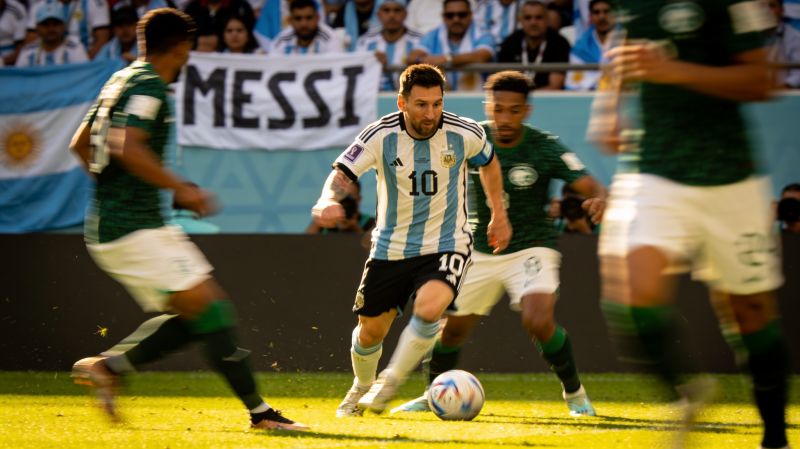
The first goal illustrated that tactical gap. Messi drifted into a central pocket。received the ball with time to scan the defensive line and slipped a perfectly weighted pass toward Nahuel Molina. The full-back’s run was unusually direct, and his finish past Andries Noppert gave Argentina a 1-0 lead in the 35th minute. That sequence sits at the heart of any serious Argentina vs. Netherlands Analysis because it was not simply a moment of individual brilliance. Messi’s movement pulled Frenkie de Jong away from the danger zone, Molina attacked the channel between Virgil van Dijk and Daley Blind, and the Dutch back line reacted too late. Argentina did not need sustained possession to create the opening. A few sharp movements were enough.Messi then doubled the advantage from the penalty spot after Marcos Acuña was brought down by Denzel Dumfries. The penalty was cleanly struck, but the wider Argentina vs. Netherlands Analysis has to account for the pressure Argentina placed on the Dutch defense before that decision. Their midfield three, supported by Rodrigo De Paul’s running and Enzo Fernández’s calm distribution, repeatedly forced the Netherlands to defend facing their own goal. The Dutch side had possession, but much of it was sterile. Memphis Depay struggled to receive between the lines, Steven Bergwijn rarely threatened the Argentine full-backs, and Cody Gakpo was pushed away from the penalty area. Louis van Gaal’s team looked organized without looking dangerous. From the touchline。the match felt almost quiet, with Argentina dictating where the noise would come from.Van Gaal’s late adjustments transformed the contest. Wout Weghorst entered as a target and immediately gave the Netherlands a different reference point. Instead of trying to pass through Argentina’s compact block, the Dutch began sending crosses, contesting second balls and attacking the box with greater conviction. Weghorst’s first goal, a precise header in the 83rd minute。reopened the game. His equalizer in the eleventh minute of stoppage time was even more revealing: a disguised free-kick routine, a short pass into the crowded area and a finish that caught Argentina’s defense flat-footed. Any Argentina vs. Netherlands Analysis that focuses only on Messi’s influence misses this tactical shift. The Netherlands did not suddenly become more elegant;they became more uncomfortable to defend. Argentina lost control because the match moved from positional football to repeated physical duels.
The closing stages produced the emotional scenes that defined the fixture, but the Argentina vs. Netherlands Analysis should not reduce the evening to confrontation and penalty drama. Argentina recovered better in extra time。with Messi dropping deeper to escape pressure and Enzo Fernández helping circulate the ball. Lautaro Martínez had chances, while the Dutch relied increasingly on direct play. In the shootout, Emiliano Martínez became the decisive figure, saving from Virgil van Dijk and Steven Berghuis before Lautaro Martínez delivered the winning kick. Argentina’s celebration was fierce, and the Dutch reaction was equally raw, reflecting a match that had moved beyond tactics into personality. My reading of the Argentina vs. Netherlands Analysis is that Argentina earned the victory through superior control, but nearly lost it because control became complacency. The game showed both sides of Scaloni’s team: technically mature, emotionally combustible and capable of finding a solution when the original plan no longer worked. That mixture carried Argentina into the semi-finals and ultimately toward the World Cup title.